Building Empire...
Building Empire...

Climate change and slave raids devastated the population. By 1250, Fofanna was abandoned. But the griots kept the stories alive — the Manticore waited.

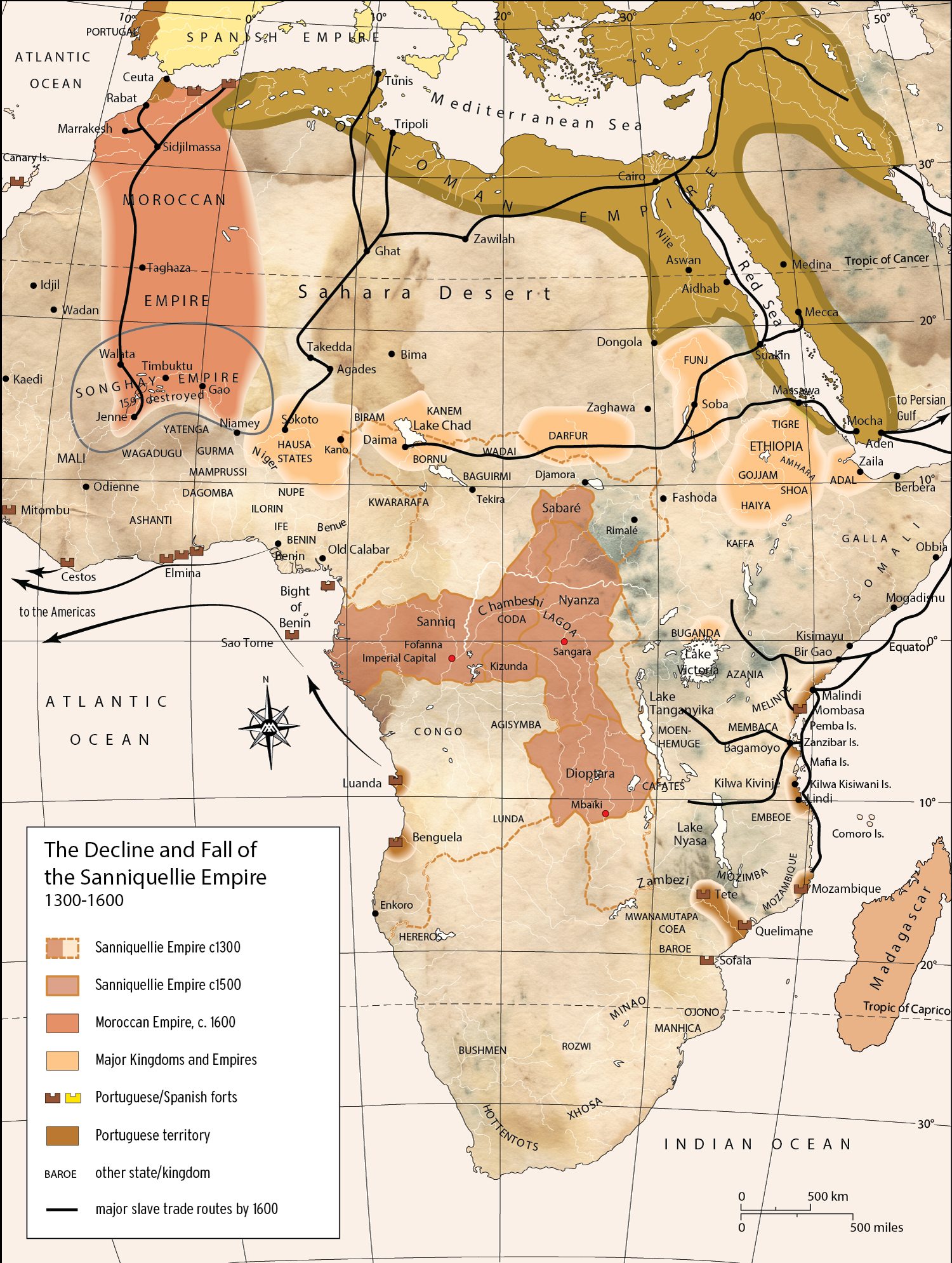
Decline and Fall

Climate change weakened the northern provinces first. Then came three centuries of slave raids from east and west that devastated the population. The hub-and-spoke economy that had distributed Dioptara's wealth began to collapse as trade routes were severed. By 1250, Fofanna was abandoned. The great libraries were scattered. The imperial administration fragmented into competing successor states. Sanniquellie vanished from maps — but the griots kept the stories alive. In hidden villages, oral historians preserved the memory of what had been. The Manticore passed from bearer to bearer, waiting.

N'Garuba
Province

Trans-Saharan Gateway

Trans-Saharan
gateway,
northern frontier

Salt trade, diamond mining, gold relay, trans-Saharan commerce

Desert-
edge oases,
salt flats,
caravan routes

Mande/Saharan synthesis, nomadic-sedentary balance

N'Garuba Province served as Sanniquellie's gateway to the Mediterranean world. Its merchants organized the caravans that crossed the Sahara, carrying gold northward and salt southward.
The province's economy depended on controlling these crucial trade routes — logistics, navigation, and the production of salt from the region's vast flats. The Northern Ridge, running along the province's frontier, also yielded diamonds — a resource that would become increasingly valuable in modern times.

Tekira, the provincial capital, grew wealthy as the hub where desert caravans met river traffic heading south into the empire's interior. The culture here synthesized Mande traditions with Saharan nomadic practices, creating a unique society comfortable in both worlds.

Specialization

Caravan logistics, desert navigation, salt production.

Key Cities

Tekira (trade hub), Darana (oasis market).